
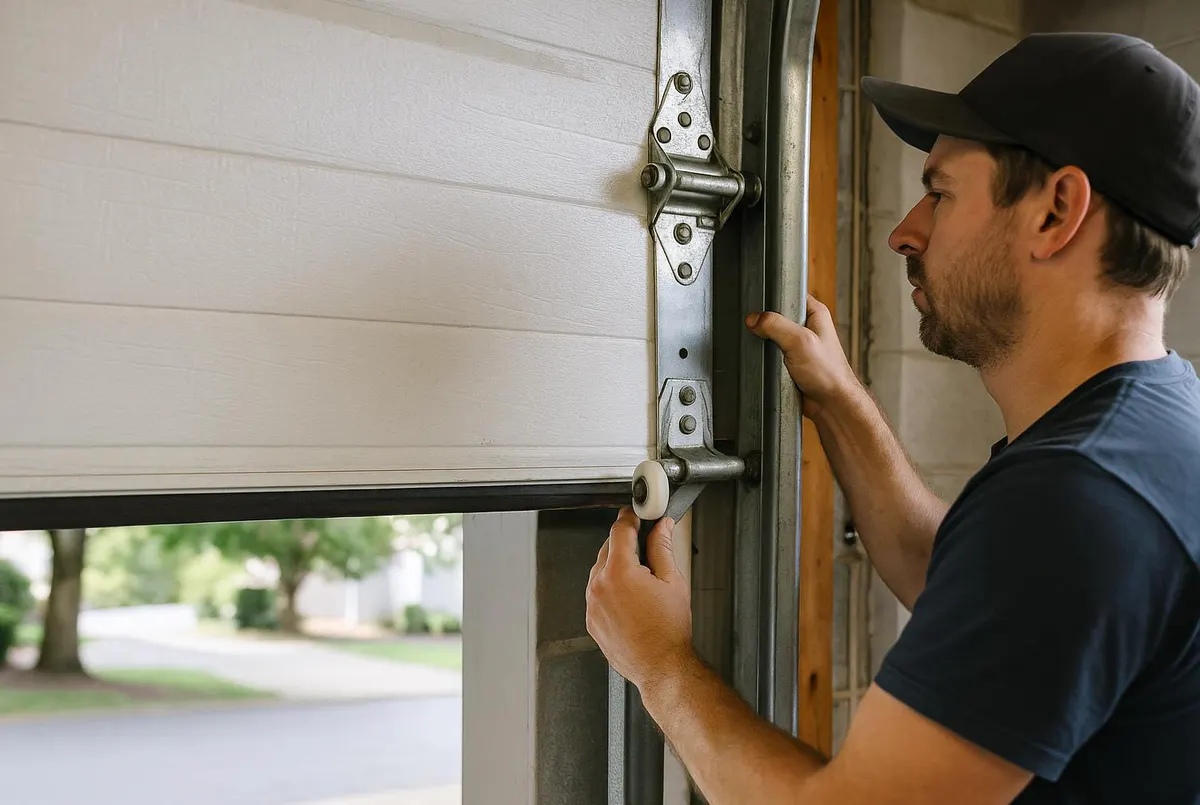
Winterizing Your Garage Door Before Clark County's First Hard Freeze
The short answer: seal the gaps, lubricate the hardware, check your springs, and test your opener's sensors before temperatures start dropping below freezing. Garage doors in this part of Indiana take a beating every winter from cold snaps, road salt, and the freeze-thaw cycles that come with our seasonal swings. A little attention now saves you from a dead opener or a snapped spring on the coldest morning of the year.
Start With the Weatherstripping
The rubber seal along the bottom of your door and the trim around the sides is your first line of defense against cold air, moisture, and road salt spray tracked in on tires. Over a humid summer, that rubber can dry out, crack, or pull away from the track. Run your hand along the bottom seal and side trim looking for gaps, stiffness, or tears. If daylight shows through the bottom when the door is closed, cold air and moisture are getting in too. Replacement weatherstripping is inexpensive and a reasonable DIY fix for most homeowners, but if the track itself is bent or the seal won't sit flush, that's usually a sign of a bigger alignment issue worth having looked at.
Lubricate Before the Cold Sets In
Cold makes grease stiffen and old lubricant turn gummy, which puts extra strain on rollers, hinges, and the opener motor. Before the first hard freeze, apply a silicone-based or lithium-based garage door lubricant to the rollers, hinges, springs, and the opener's drive chain or screw. Avoid WD-40 as a long-term lubricant; it's a solvent that displaces dirt short-term but doesn't hold up well once temperatures drop. Wipe off any built-up grime first so you're not just sealing dirt against the metal.
Check Spring Tension Now, Not in January
Torsion and extension springs are under constant tension, and cold metal becomes more brittle. A spring that's already worn can fail without warning once winter stress is added to the mix, and this tends to happen more often during the first real cold snap of the season than at any other time of year. Watch for a door that feels heavier than usual when lifted manually, jerks instead of moving smoothly, or makes a loud bang from the garage (a classic sign of a spring already giving out). Springs are not a safe DIY repair; they're under enough tension to cause serious injury. If yours looks worn, rusted, or stretched unevenly, get spring replacement handled before the cold makes a bad spring worse.
Test the Balance and the Auto-Reverse Safety Feature
With the opener disconnected, lift the door halfway by hand. It should stay in place on its own. If it drifts up or crashes down, the springs are out of balance, which puts added strain on the opener motor during exactly the season when you need it working reliably. Also test the auto-reverse safety sensors by waving a hand or placing an object in the door's path while it's closing; it should reverse immediately. Cold weather can affect sensor alignment slightly as the frame shifts with temperature changes, so this is worth checking even if it worked fine all summer.
Protect Metal Parts From Salt and Moisture
Road salt tracked in on vehicle tires doesn't stay on the floor. It splashes onto tracks, hinges, and the bottom of the door itself, where it accelerates rust over the winter. Hose down the lower section of the door and the tracks periodically through the season, and wipe down exposed metal hardware when you notice salt residue building up. This is a small habit that extends the life of hinges and rollers considerably over a few winters of freeze-thaw cycles.
Insulation Matters More Than People Think
If your garage is attached to the house or you use it as a workspace, an uninsulated door lets a surprising amount of cold air through, and it works both ways: heat escapes in winter, humidity and heat build up in summer. Insulated garage doors or retrofit insulation kits are worth considering if you're noticing a cold garage is affecting an adjacent room, or if your current door is old enough that it was never built with insulation in mind.
Don't Ignore Small Dents and Panel Damage
A dent or warp in a panel might seem cosmetic in October, but once ice forms in that gap or moisture gets trapped behind a bent seal, it can worsen quickly. Address panel damage before winter rather than after a January freeze locks everything in place.
When to Call Henryville Garage Door
If your door is off balance, a spring looks worn or has already failed, or your opener's sensors aren't responding reliably, those aren't jobs to leave until spring. Our garage door maintenance visits cover exactly this kind of pre-winter check: lubrication, balance testing, hardware inspection, and weatherstripping condition, so small issues get caught before the cold turns them into a stuck or broken door. If a spring does fail or your opener stops working on a freezing morning, our emergency garage door service covers Henryville and the surrounding area, including Scottsburg, Sellersburg, Charlestown, and Jeffersonville, so you're not stuck waiting days for a fix.
If you're looking for a garage door technician near Henryville, Scottsburg, or anywhere in Clark County before winter hits, give Henryville Garage Door a call. We'll get your door ready for the cold and keep it working right through the season.